All Categories
Featured
Table of Contents
A few of these advantages content commerce deals are: Online shopping has hardly been a replacement for shopping with buddies, it's too technical, too dull, and not an experience. And those who required guidance chosen to go to a shop with genuine salespeople. Through content-driven commerce, sellers and brand names can provide their consumers better shopping experiences consisting of recommendations and enjoyment.
The much better notified consumers feel, the more most likely they are to complete the purchase with them. In some item classifications, such as fashion, two-thirds of all products ordered end up as returns, with typical factors being: The item looks various in genuine life than it does in photos A garment runs larger or smaller sized than typical Consumers understand when they try it out that the product just doesn't meet their expectations By providing in-depth details, images and videos, you can prevent your online clients from making the incorrect purchase and decrease the number of returns.
Assist your customers utilize the item after purchase through content like how-to guides or FAQs to utilize the item skillfully and avoid errors. It's difficult to differentiate yourself simply based on what you provide, and using more consumer service than Amazon is hardly possible.
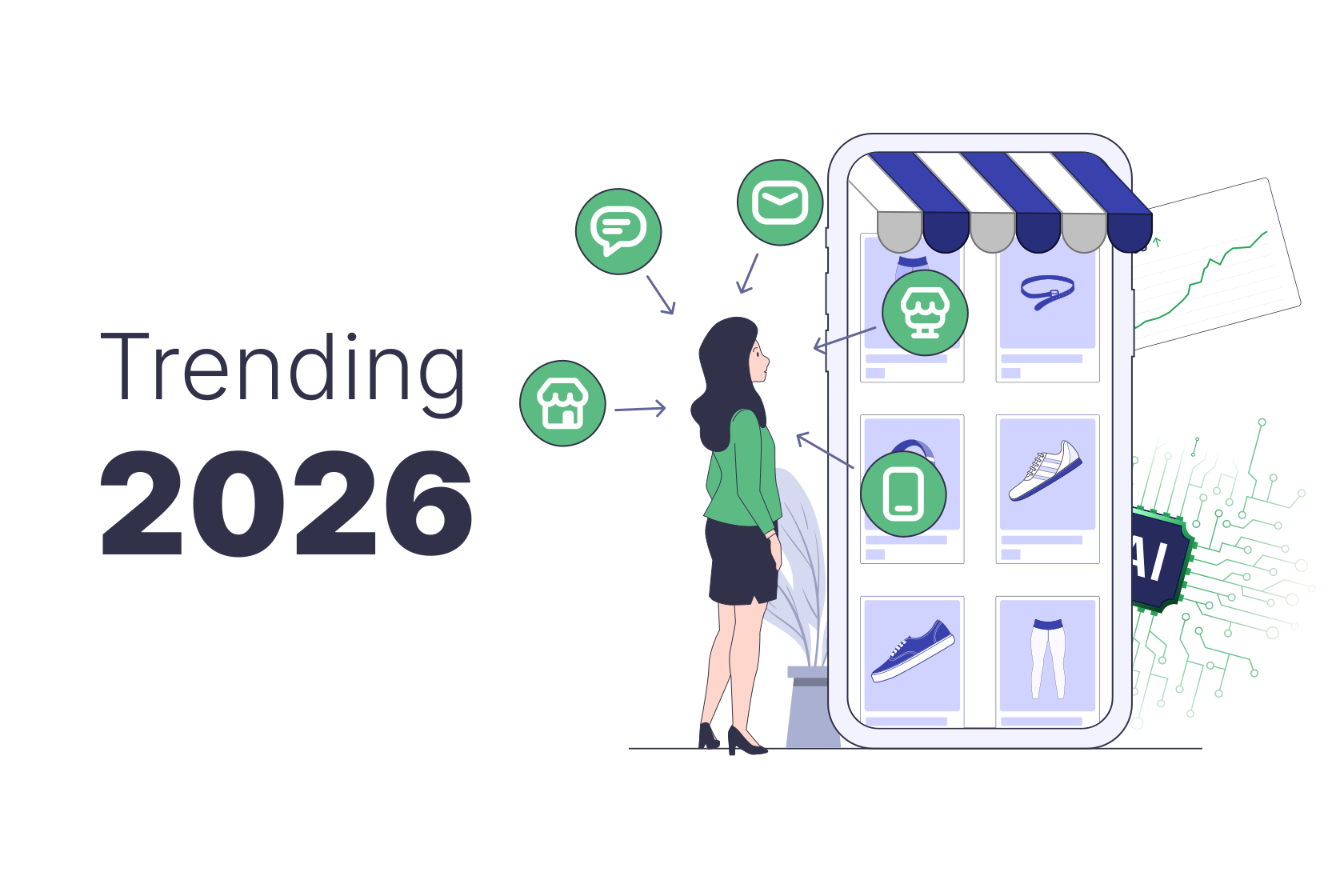
High-Impact SEO Tactics for Growing Retail Outlets
Through the individual design of your material, you can provide clients a distinct experience that they can just get from you. The more unique and entertaining content you can distribute, the easier for your target groups to advise you via messaging apps or social media platforms among good friends.
Usually, natural traffic represent one-third to one-half of all visits to online stores. You will be discovered regularly through your material not just with your online shop but with all the channels you use. As e-commerce websites or companies produce more material, the likelihood that clients might end up being overloaded and baffled boosts.
The individualized email newsletter was one of the first approaches of customization. Today's ecommerce and content management systems provide private projects, items, or useful content to consumers. The store or site looks completely various for different groups of consumers or even individuals. Many content personalization examples highlight this technique. Companies can personalize their content by defining different consumer groups and by hand designating consumers to these groups, such as personal customers, service consumers, or male or female clients.
How to Scale the Customer Lifecycle Results
The more data business have about their customers, the much better this works. As charming as content commerce noises and its lots of benefits for marketing and sales, the technical implementation is an obstacle. There was a clear "department of labor" in the past: The online shop manages the products, and the content management system handles the website with landing pages, blogs, and other material.
Content-driven commerce requires deep combination of content marketing channels with ecommerce functions. This is nearly difficult to implement with disparate or just partly compatible systems. What makes it so hard, and what does the solution appear like? The essential issue is that information and material are distributed in various systems.
For example, item data is handled in the store service, marketing texts in the material management system, images and videos in digital property management software, and the information for customization comes from the analytics software application. All this data needs to be "put together" for a uniform, digital consumer experience. This is technically intricate if it operates at all.
Essential Web Measurement Tutorials for GrowthWays to Scale Buyer Lifecycle Results
A headless material management system (CMS) is the ideal structure block in the procedure of executing an integrated content commerce idea. Material authors can work with all data and content as if it were native, existing content in the CMS.
Maximizing User Lifecycle Marketing in 2026The material, in turn, can be played out to a virtually limitless number of different front ends and channels. Content commerce creates an appealing and informative visitor experience by integrating top quality visuals, descriptive material, client evaluations, individualized recommendations, and social media aspects.

Latest Posts
Developing a Robust Growth Marketing and Long-Term ROI
Boosting Total Value With Data
Boosting Shop Sales Via Strategic Content Marketing